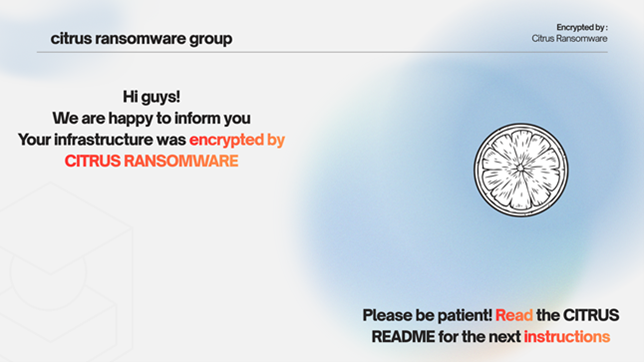
In September, we promised to share details about the Citrus Ransomware group discovered by our experts. That time has come: we are publishing a breakdown of the techniques, tactics, procedures, and tools used by these threat actors. Here are a few interesting details:
— The group gains initial access through compromised contractors: stolen employee credentials are used to connect to corporate VPNs or directly to externally accessible RDP terminal servers.
— During the attack, the threat actors run PowerShell scripts, batch files, and commands generated with the help of an LLM. This is detectable by the detailed and overly well-written code comments: as if a schoolteacher wrote them.
— Attackers escalate privileges in the system by exploiting CVE-2026-54121 (Certighost), which we covered this summer, as well as through vulnerabilities in 1C:Enterprise servers, about which we have written a hundred times.
— To make life harder for defenders, the threat actors delete their own tools and working files. While the tools are in use within the victim’s infrastructure, attackers mask their filenames as legitimate files from a well-known cybersecurity vendor: KasperskyGPO_Deploy_64.exe, KasperskyAgent.exe, KasperskyAgentInstallTask and so on.
— To mass-deploy the ransomware across victim systems, attackers use malicious Group Policy objects. Among other malicious actions, the policy disables Windows Defender antivirus protection and sets a ransom note as the desktop wallpaper (see screenshot).
— The tools and techniques of Citrus are similar to the TTPs of the Toy Ghouls group. Both groups are Russian-speaking and they attack Russian companies only. In several incidents, we observed simultaneous infrastructure compromise by threat actors from both Toy Ghouls and Citrus.
Further details on the Citrus attacks and indicators of compromise can be found in the article "Citrus Ransomware: VLESS for traffic, Sn00py for encryption, and LLMs lending a hand".